CSEL SCIENCE
Assess Students' Academic Language and Science Knowledge.l)
Regarding formative assessment, all reading passages include questions that students answer in pairs after reading or listening to science content. At the end of each session, students complete an exit ticket. The first part of each exit ticket is an academic language exercise, generally vocabulary matching. The second part focuses on key science concepts from the session, generally on released state assessment items in which students answer questions related to the science content. At the module level, there are study guides and assessments to test knowledge across sessions, including items that mirror state end-of-course (EOC) exams.
Exit Ticket
Description of key features:
1
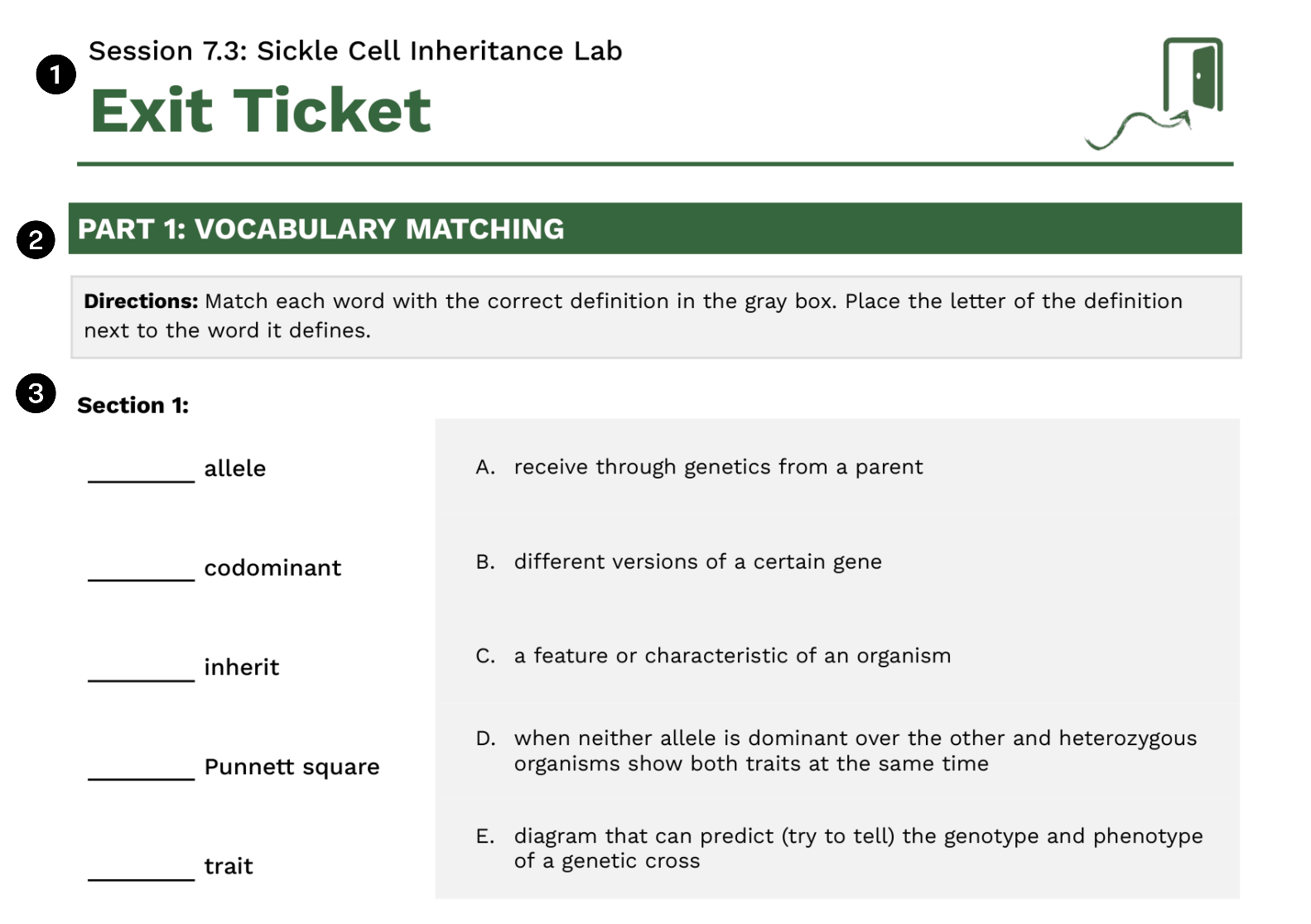
Each session includes an associated exit ticket for assessment.
2
The first part of the exit ticket is an academic language exercise. In many cases, as shown in this example, students match vocabulary words that appeared in the session with the correct definition.
3
Longer lists of vocabulary words are divided into two smaller sections to support students in completing the matching activity.
4
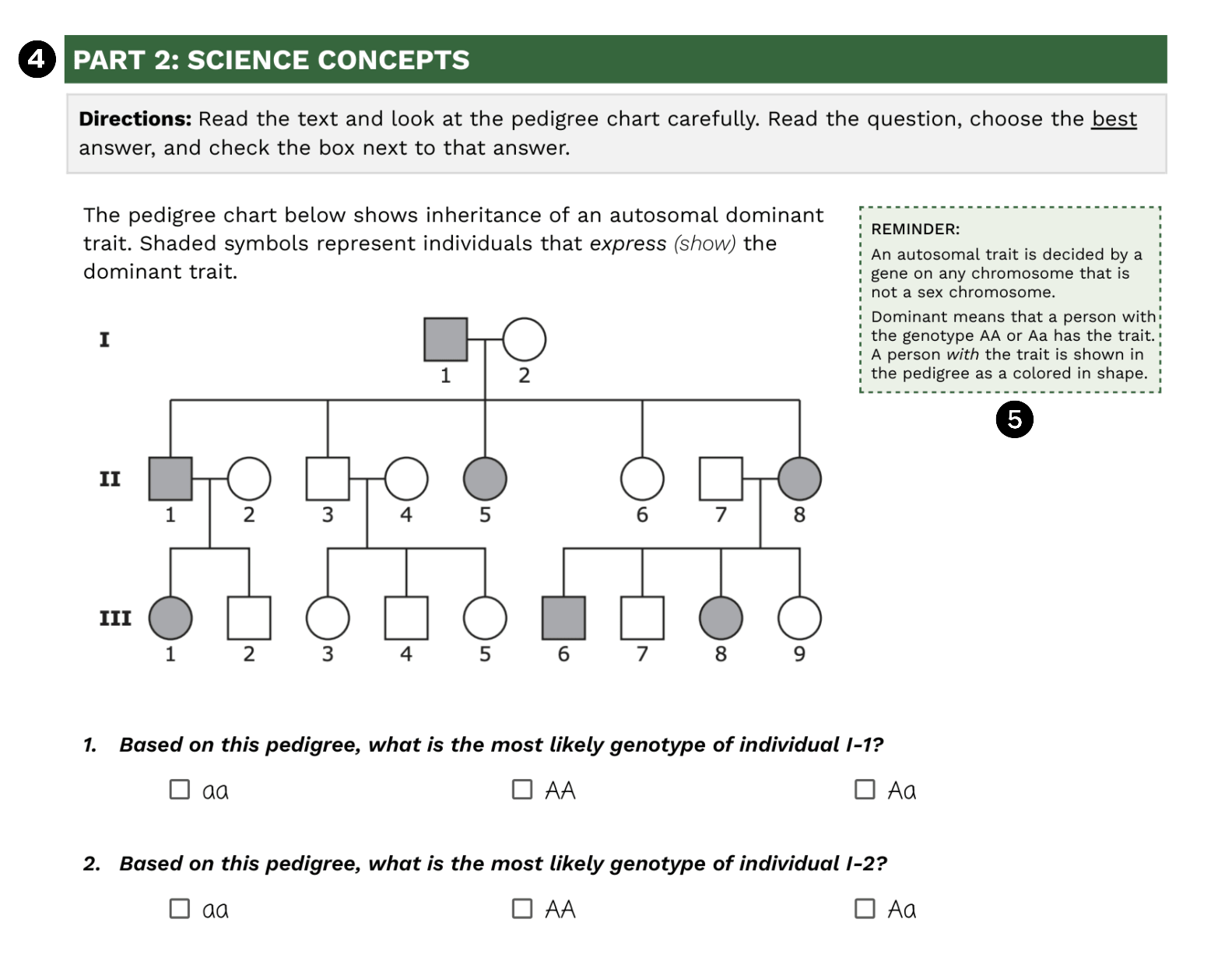
The second part of the exit ticket focuses on the key science concept from the session: analyzing a genetic pedigree.
5
Green boxes provide helpful contextual information or clarify science terms, practices, or tasks that students may need to better understand Part 2 of the Exit Ticket. The green box here reminds students about autosomal and dominant traits.
The images below and on the following page show the exit ticket associated with Session 7.3:
Sickle Cell Inheritance Lab. The first part of the exit ticket is an academic language exercise: vocabulary matching. The second part focuses on the key science concept from the session: analyzing a genetic pedigree. Key features are highlighted in the images using circled letters.
Quiz
Description of key features:
1
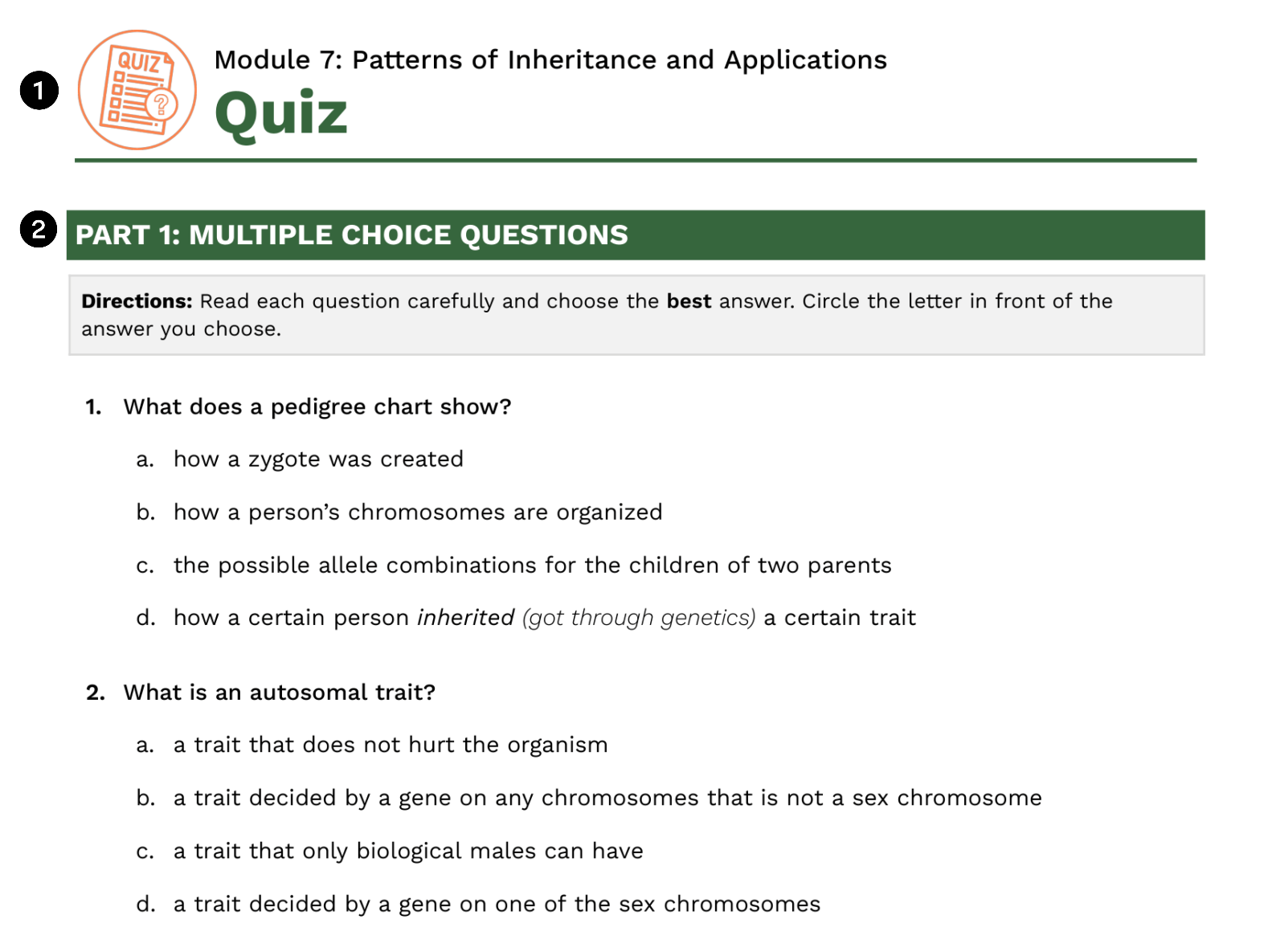
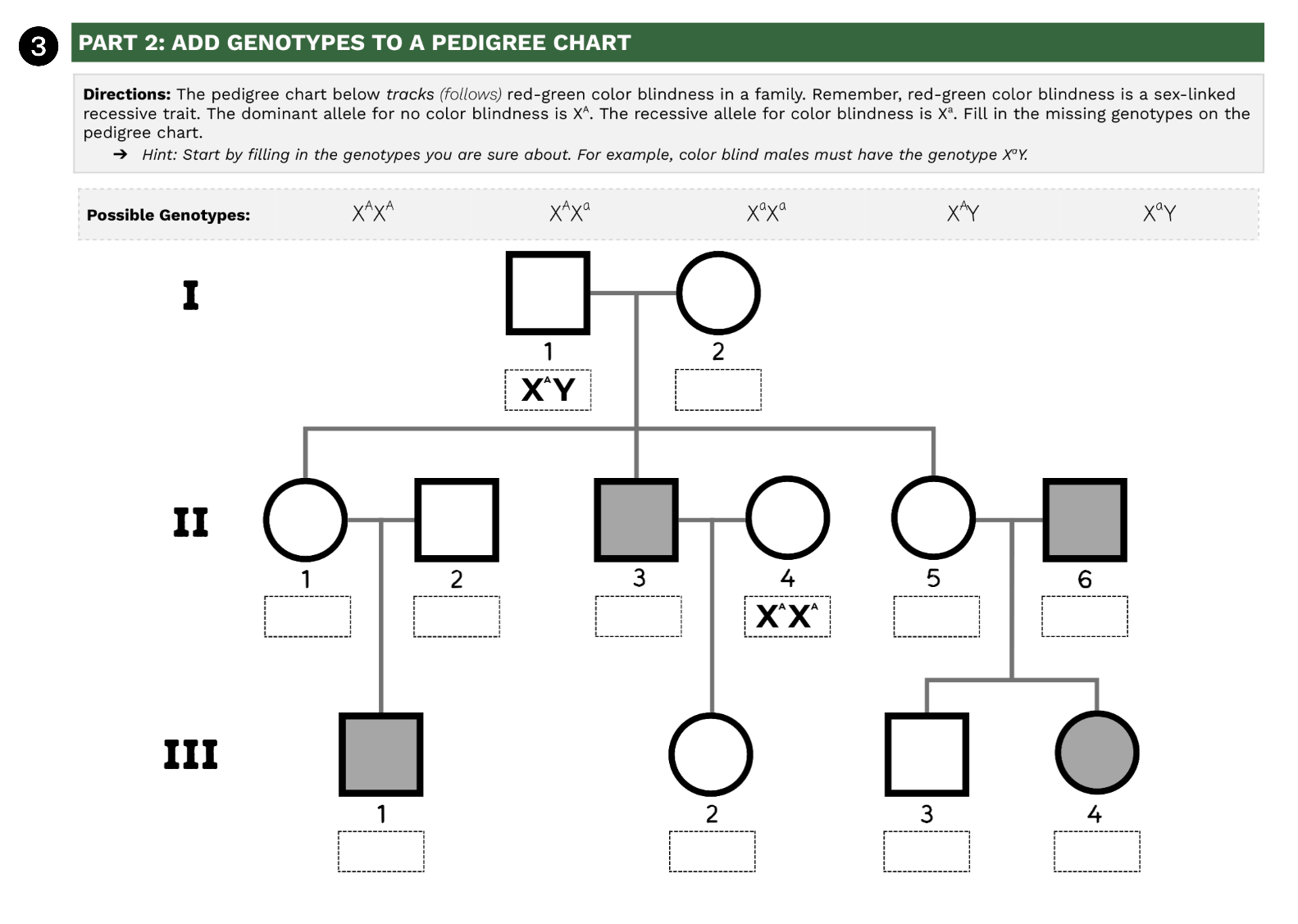
Each module includes a quiz for assessment. Quizzes consist of multiple parts that involve different ways for students to engage with the content and show their learning. For example: multiple choice questions, matching activities, diagram labeling, and short writing tasks.
2
The first part of the quiz shown here includes multiple choice questions.
3
The second part of the quiz shown here has students practice science skills from the module: completing a pedigree chart to track a certain trait across multiple generations in a family.
The images below show part of a quiz from Module 7:
Patterns of Inheritance and Applications. This quiz assesses content and vocabulary from the module, including reading pedigree charts, identifying patterns, adding genotypes to a pedigree chart, and explaining how traits are inherited across generations. Numbered circles in the images highlight key features that are explained below.