CSEL SCIENCE
Alignment with Current Science Standards
(high school)
CSEL Science aligns with three-dimensional and phenomenon-based learning as described in the Framework for K–12 Science Education (National Research Council, 2012) and the Next Generation Science Standards (NGSS Lead States, 2013).
EXAMPLE:
Session 7.3: Sickle Cell Inheritance Lab
For example, Session 7.3: Sickle Cell Inheritance Lab demonstrates how the CSEL Science curriculum supports three-dimensional and phenomenon-based learning as described in the Framework for K–12 Science Education (National Research Council, 2012).
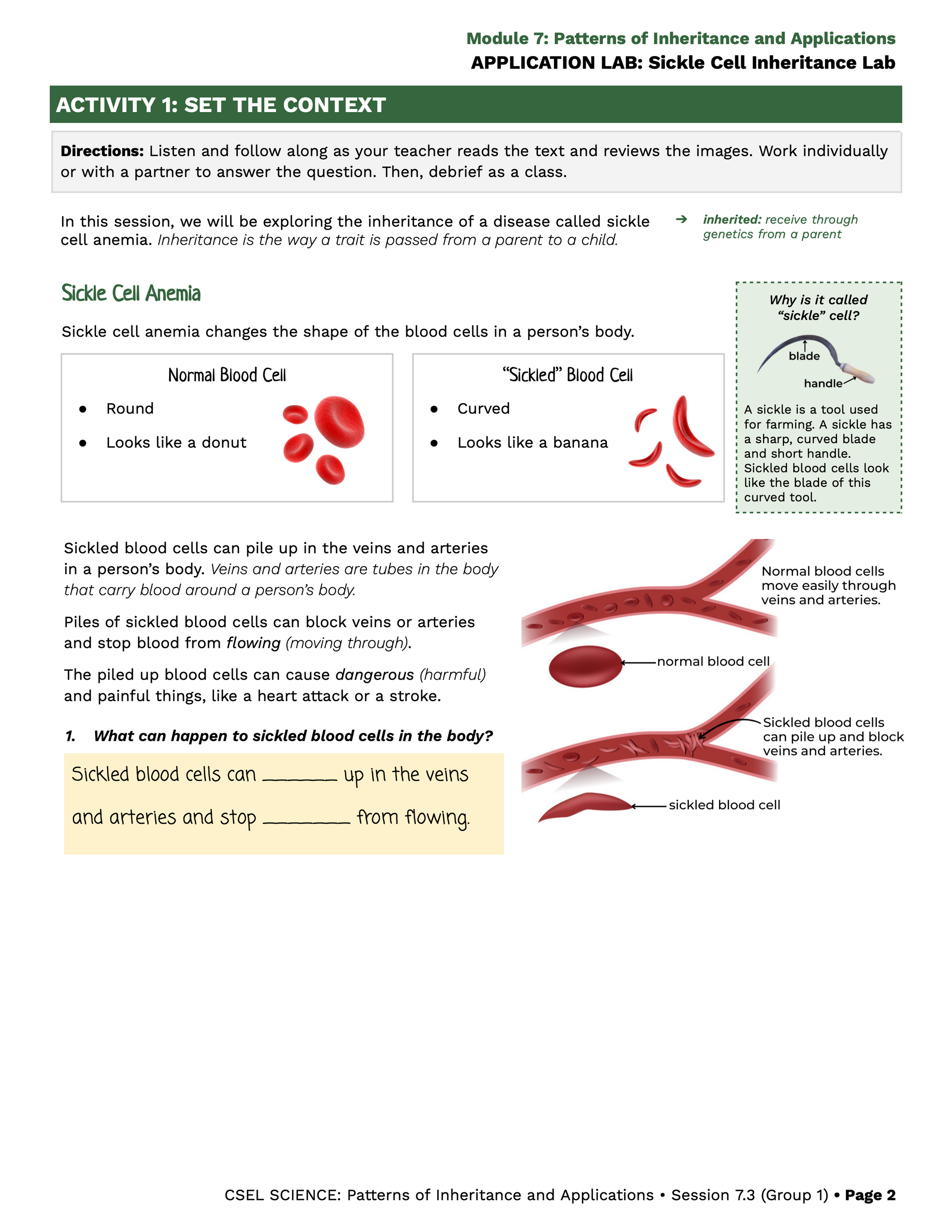
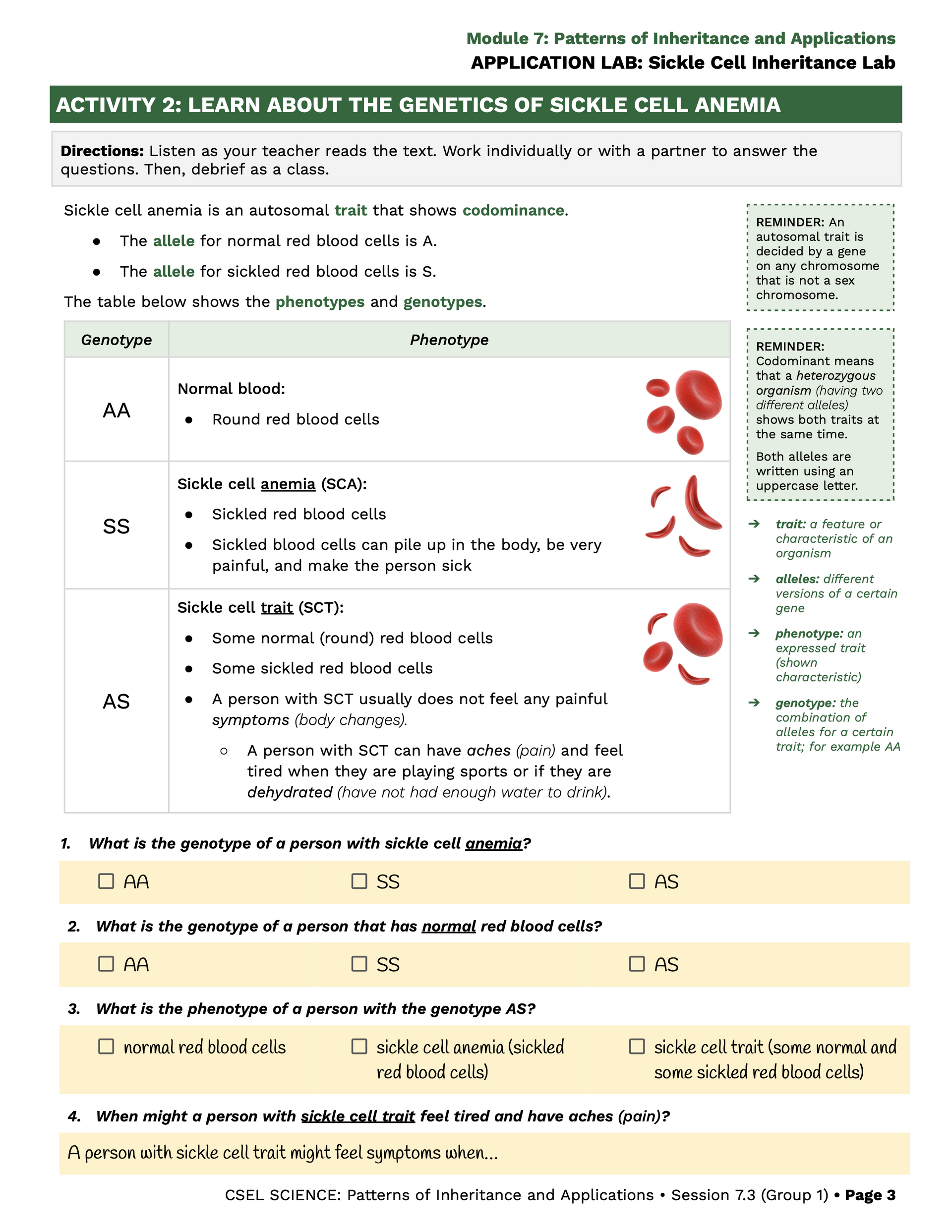
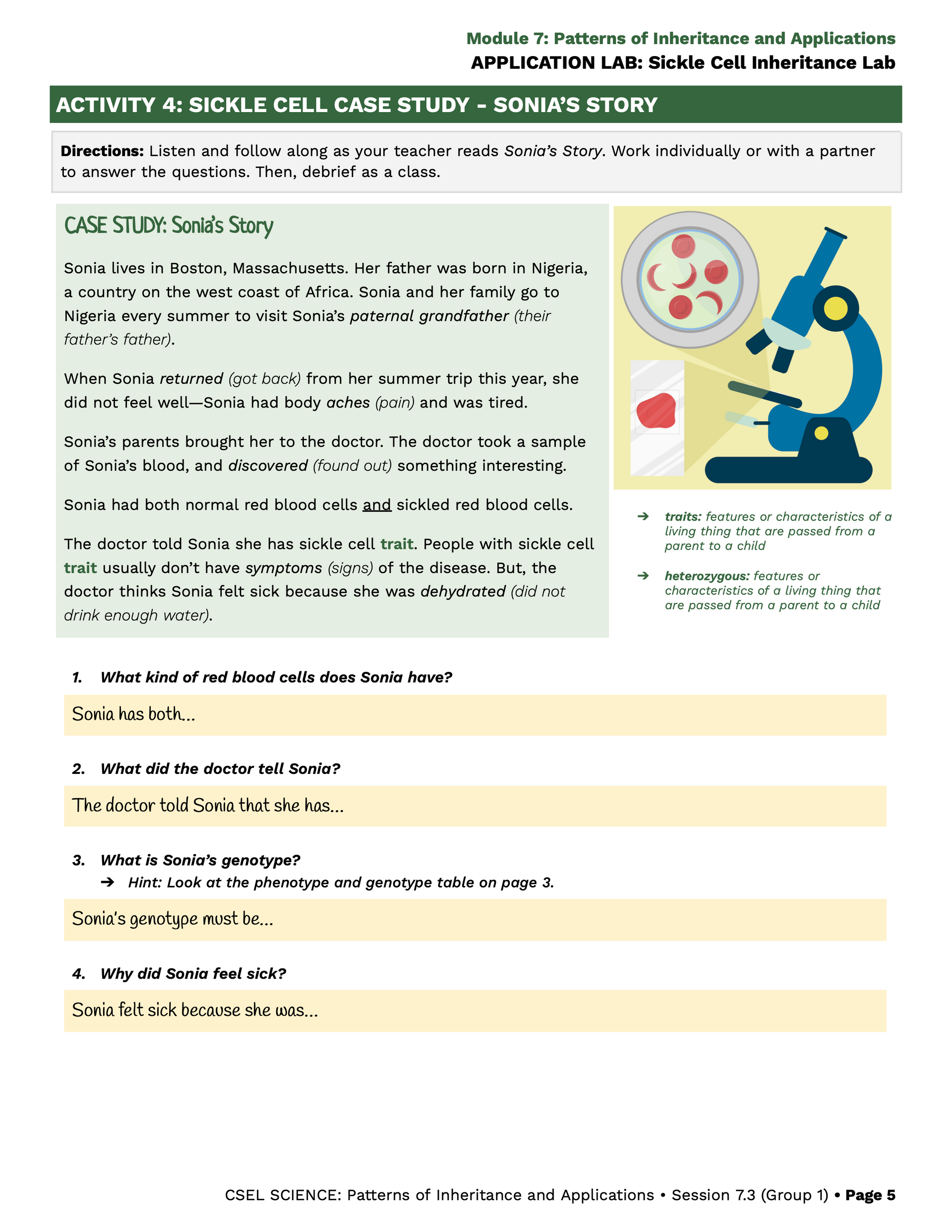
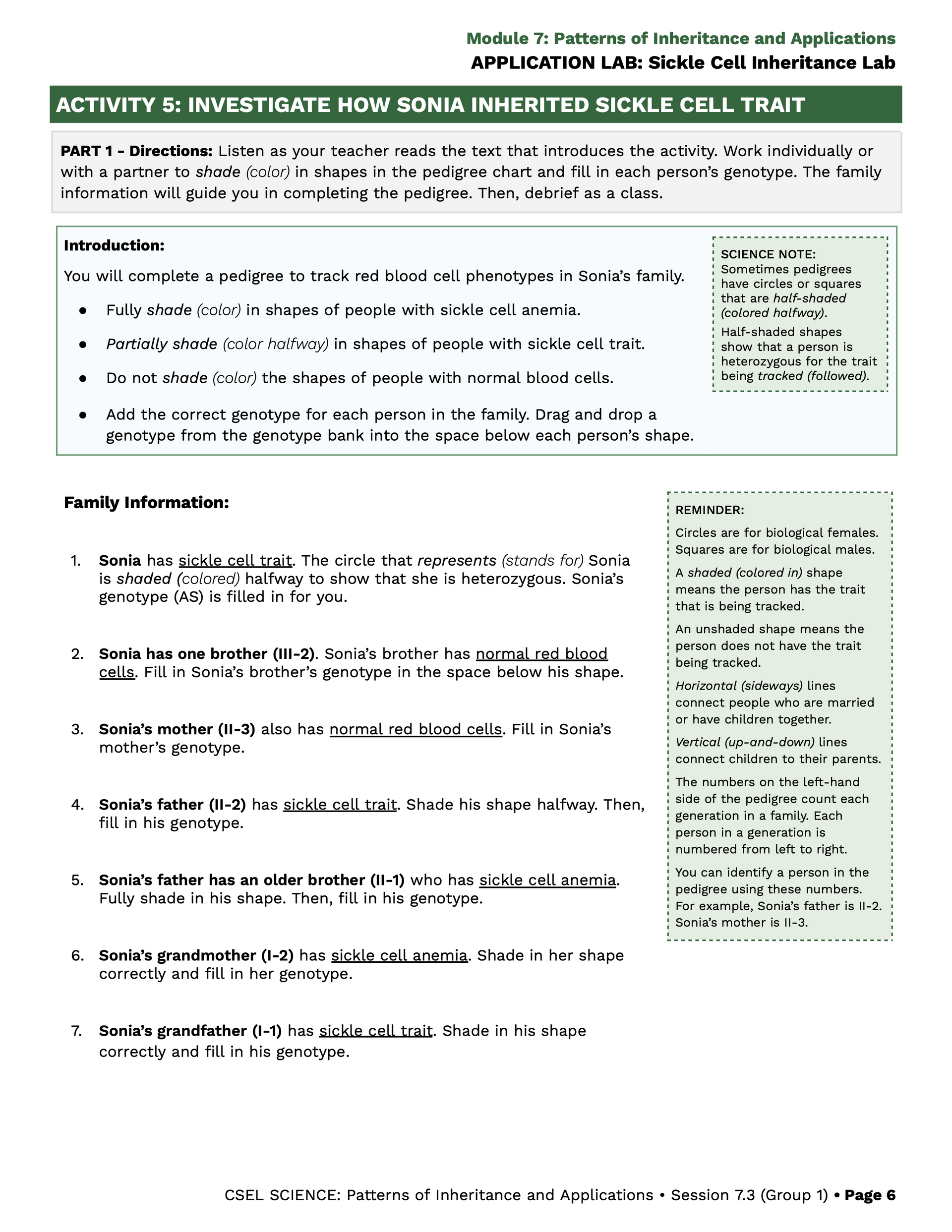
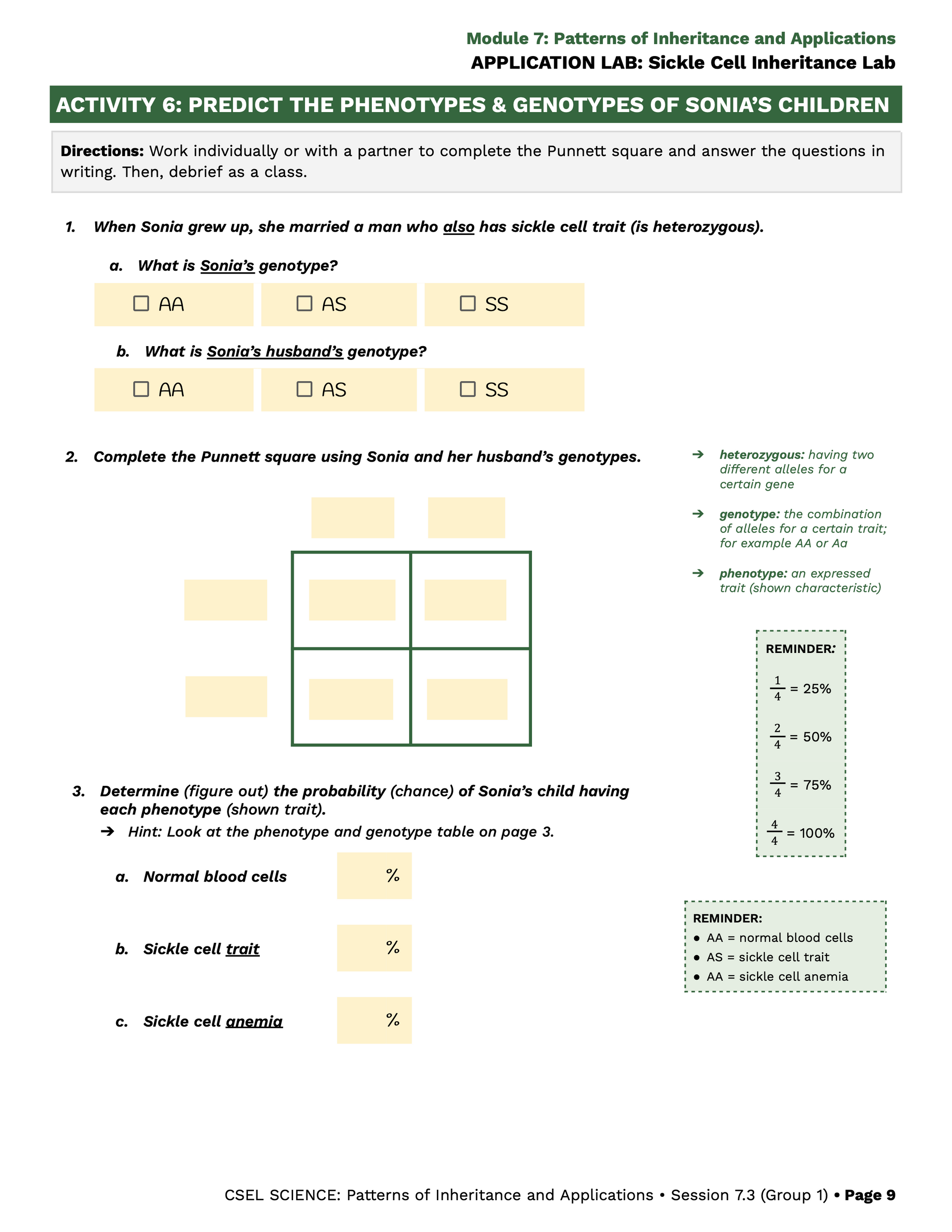
Sickle Cell Inheritance Lab aligns with NGSS Performance Expectation HS-LS3-3, which focuses on using probability to explain patterns of inherited traits. Instruction centers on a real biological phenomenon: the physical symptoms and differences in red blood cell shape associated with sickle cell anemia.
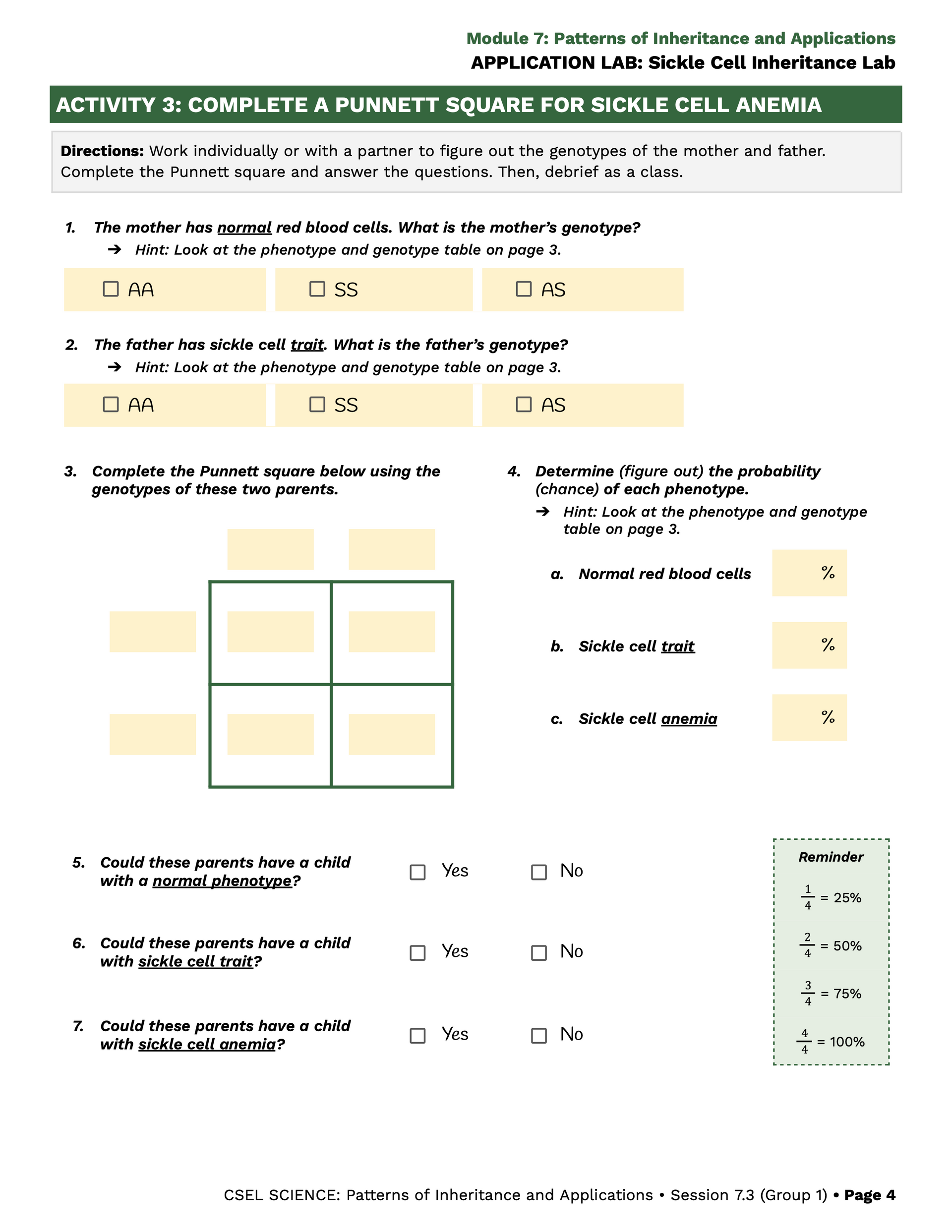
The session frontloads observable health effects rather than abstract genetic rules. Students build and use models, such as Punnett squares and pedigree charts, analyze data to identify inheritance patterns, and use probability to explain how sickle cell anemia appears in families. Crosscutting ideas, including patterns, cause and effect, structure–function, and scale, help students connect their reasoning across activities.
The phenomenon is revisited across the session as students move from explaining symptoms to predicting offspring traits, supporting sustained sensemaking rather than isolated or procedural work. An optional extension activity on malaria and heterozygote advantage is available for students who complete the core activities early. Teachers in states can implement this extension activity with an additional standard on how genetic and environmental factors influence traits.